
Hemangioma
Hemangioma Treatment in Aurangabad – Dr. Vivek Jaju
With advances in medicine, many hemangiomas can now be managed safely using non-surgical or minimally invasive treatments, depending on their size, location, and symptoms.
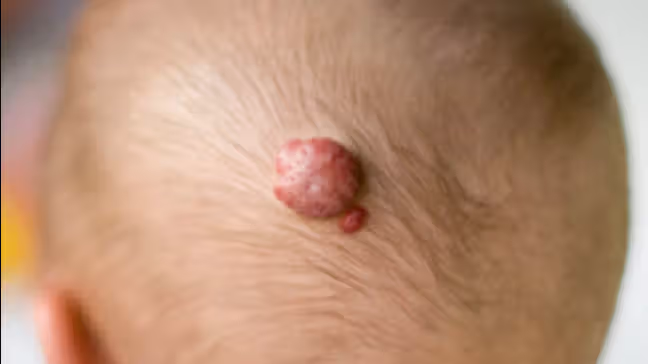
Types of Hemangioma
Cutaneous Hemangioma:
Appears on the skin as a red or bluish swelling. Commonly seen in infants and children.Hepatic Hemangioma:
Occurs in the liver. Often detected incidentally during scans done for other reasons.Deep or Soft Tissue Hemangioma:
Develops in muscles or deeper tissues and may cause pain or swelling.
Most hemangiomas remain stable, but some may require treatment if they cause symptoms.
Symptoms of Hemangioma
Symptoms depend on the location and size of the hemangioma. Common signs include:
Visible red or bluish lump on the skin
Swelling or fullness in the affected area
Pain or discomfort (especially in deep hemangiomas)
Pressure symptoms if nearby organs are affected
Abdominal pain or heaviness in liver hemangiomas
Many hemangiomas are asymptomatic and found incidentally.
Diagnosis of Hemangioma
Diagnosis helps confirm the benign nature of the lesion and plan management. Evaluation may include:
Clinical examination
Ultrasound imaging
CT scan or MRI for detailed assessment
Doppler studies to assess blood flow
Biopsy is rarely needed, as imaging is usually sufficient.
Treatment Options for Hemangioma
Treatment depends on symptoms, size, and location.
Observation
Small, asymptomatic hemangiomas may only require regular monitoring
Minimally Invasive Treatment
Image-guided embolization: Blocks blood supply to the hemangioma, causing it to shrink
Non-surgical and targeted
Preserves surrounding healthy tissue
Short recovery time
Surgical Treatment (Selected Cases)
Recommended only if minimally invasive options are not suitable or complications occur
Benefits of Minimally Invasive Treatment
No large incisions or scars
Reduced pain and faster recovery
Lower risk of complications
Short hospital stay or day-care procedure
Effective symptom relief
When Is Treatment Needed?
Treatment may be advised if the hemangioma:
Grows rapidly
Causes pain or functional problems
Leads to cosmetic concerns
Affects nearby organs
Early evaluation helps decide the safest and most effective approach.