
Introduction
Leg swelling and pain are easy to dismiss. Many people assume it is a muscle strain or fatigue. But in some cases, the real cause is a blood clot forming silently inside the deep veins of the leg, a condition called Deep Vein Thrombosis, or DVT.
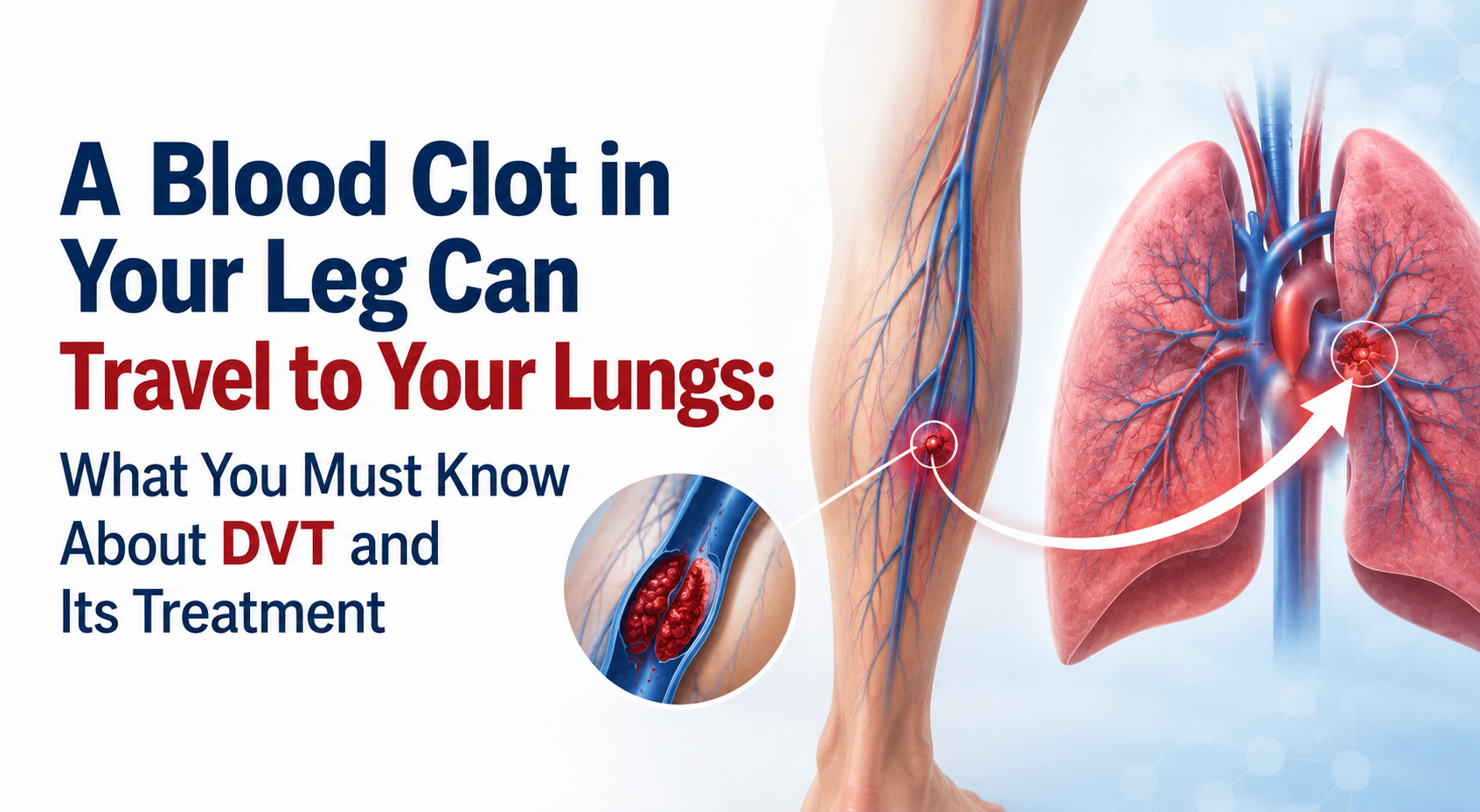
DVT is not just a painful inconvenience. Left undetected, the clot can break off, travel through the bloodstream, and block the arteries supplying the lungs. This complication, known as pulmonary embolism, is potentially fatal. Understanding DVT and seeking timely treatment can save your life.
What Is Deep Vein Thrombosis (DVT)?
DVT occurs when a blood clot forms in one of the deep veins of the body, most commonly in the leg. Deep veins carry a large volume of blood back to the heart. When a clot blocks this flow, blood backs up, causing swelling, pain, and warmth. In many cases, DVT produces no visible symptoms at all, making it especially dangerous.
According to the International Society on Thrombosis and Haemostasis, venous thromboembolism affects an estimated 10 million people worldwide each year.
What Causes DVT?
Common risk factors include prolonged immobility (long flights, bed rest after surgery), recent orthopaedic or abdominal surgery, cancer and chemotherapy, use of oral contraceptive pills, obesity, pregnancy, age above 60, a previous DVT history, and inherited clotting disorders.
In India, the risk is rising alongside increasing rates of obesity, sedentary work, and surgical volumes. Many cases go unrecognised because symptoms are mild or absent.
Recognising the Symptoms of DVT
DVT symptoms typically affect one leg more than the other:
- Swelling in the calf or thigh
- Aching, throbbing, or cramping pain
- Skin that is warm, red, or discoloured
- Pain that worsens when the foot is flexed upward
Around 30 to 50 percent of DVT cases are entirely asymptomatic. The clot grows silently and may only announce itself when it reaches the lungs.
Why DVT Is a Medical Emergency
When a clot breaks away, it travels to the lungs and causes pulmonary embolism. Symptoms include sudden breathlessness, chest pain, rapid heart rate, and in severe cases, collapse or sudden death.
Long-term, permanent damage to vein valves causes post-thrombotic syndrome: chronic swelling, pain, and leg ulcers that resist healing for years after the initial clot.
How Is DVT Diagnosed?
A Duplex Ultrasound is the primary diagnostic tool. It is non-invasive, safe, and clearly identifies clots in the veins. For complex cases, D-dimer blood tests, CT pulmonary angiography, or MRI venography may also be used.
Treatment Options for DVT
Anticoagulation therapy (blood thinners) is first-line treatment. Heparin and oral anticoagulants (NOACs) stop the clot from growing while the body dissolves it over time.
Catheter-directed thrombolysis (CDT) is a minimally invasive procedure in which a thin catheter delivers clot-dissolving medication directly into the blocked vein under image guidance. CDT is more effective than anticoagulation alone for extensive DVT and significantly reduces the risk of post-thrombotic syndrome.
Mechanical thrombectomy uses a catheter-based device to physically remove the clot without open surgery.
IVC filter placement is recommended for patients who cannot take anticoagulation, preventing clots from reaching the lungs.
Compression stockings are used alongside all treatments to reduce swelling and protect vein valve function.
At Jaju IR Clinic, all these procedures are performed using minimally invasive, image-guided techniques with faster recovery compared to open surgery.
Book a Consultation at Jaju IR Clinic, Chhatrapati Sambhajinagar
If you are experiencing unexplained leg swelling, pain, or redness in one leg, do not wait. Early diagnosis is the difference between a manageable condition and a life-threatening event.
Dr. Vivek Vijaykumar Jaju (MBBS, MD, FVIR — Tata Memorial Hospital, Mumbai) is an expert in catheter-directed DVT treatment, IVC filter placement, and minimally invasive endovascular care.
Jaju Clinic | Opp. HDFC Bank, Sutgirni to Shivaji Nagar Road, Near Petrol Pump, Garkheda, Chhatrapati Sambhajinagar 431009
Call +91 8446060237 or email ir.dept_jajuclinic@zohomail.in to book your appointment.
Conclusion
DVT is serious but highly treatable when caught early. Whether recovering from surgery, immobile for extended periods, or experiencing unexplained leg symptoms, a specialist consultation can prevent a life-threatening complication.
Expert DVT treatment in Aurangabad is now available at Jaju IR Clinic, Chhatrapati Sambhajinagar, without the need to travel to a metro city.
FREQUENTLY ASKED QUESTIONS (FAQs)
Q1: What are the early warning signs of DVT?
The most common early signs are swelling in one leg, aching or throbbing pain in the calf or thigh, skin warmth over the affected area, and visible redness or discolouration. However, up to 50 percent of DVT cases have no symptoms at all.
Q2: Can DVT be treated without surgery?
Yes. Most DVT cases are treated with anticoagulation medications (blood thinners). For severe or high-risk cases, minimally invasive procedures such as catheter-directed thrombolysis or mechanical thrombectomy can dissolve or remove the clot without open surgery.
Q3: How dangerous is a blood clot in the leg?
Very dangerous if untreated. The clot can break off and travel to the lungs, causing pulmonary embolism, which is a life-threatening emergency. DVT can also cause long-term vein damage and leg ulcers if not properly managed.
Q4: How long does DVT treatment take?
Anticoagulation therapy typically continues for 3 to 6 months, or longer in patients with a high risk of recurrence. Catheter-directed procedures are performed over one to two days in hospital. Follow-up monitoring is important during the treatment period.
Q5: Who is at the highest risk of developing DVT?
High-risk groups include post-surgical patients (especially orthopaedic surgery), those on prolonged bed rest, long-haul travellers, pregnant women, patients with cancer, those with a personal or family history of clotting disorders, and obese individuals.
Q6: Is DVT common in India?
DVT is increasingly common in India due to rising rates of obesity, sedentary work culture, increasing surgical volumes, and under-recognition of the condition. Many cases go undiagnosed because symptoms are mild or absent.
Q7: Can DVT recur after treatment?
Yes. DVT can recur, particularly in patients with inherited clotting disorders, cancer, or other persistent risk factors. Long-term anticoagulation therapy may be prescribed for patients at high risk of recurrence.
Q8: What is the difference between DVT and varicose veins?
DVT is a blood clot in a deep vein and is a medical emergency. Varicose veins are enlarged, twisted superficial veins caused by faulty valves. While both affect the leg veins, they are separate conditions with different treatments and different levels of urgency.
Q9: Can I prevent DVT?
Yes. Preventive measures include staying mobile during long travel (walking every hour), staying well hydrated, wearing compression stockings when recommended by your doctor, maintaining a healthy weight, and following your surgeon’s advice on blood thinners before and after surgery.
Q10: When should I go to a doctor for leg swelling?
You should seek medical evaluation immediately if you have sudden swelling in one leg, pain in the calf or thigh, skin warmth or redness, or if you develop sudden breathlessness, chest pain, or rapid heartbeat. These are potential signs of DVT or pulmonary embolism and require urgent assessment.